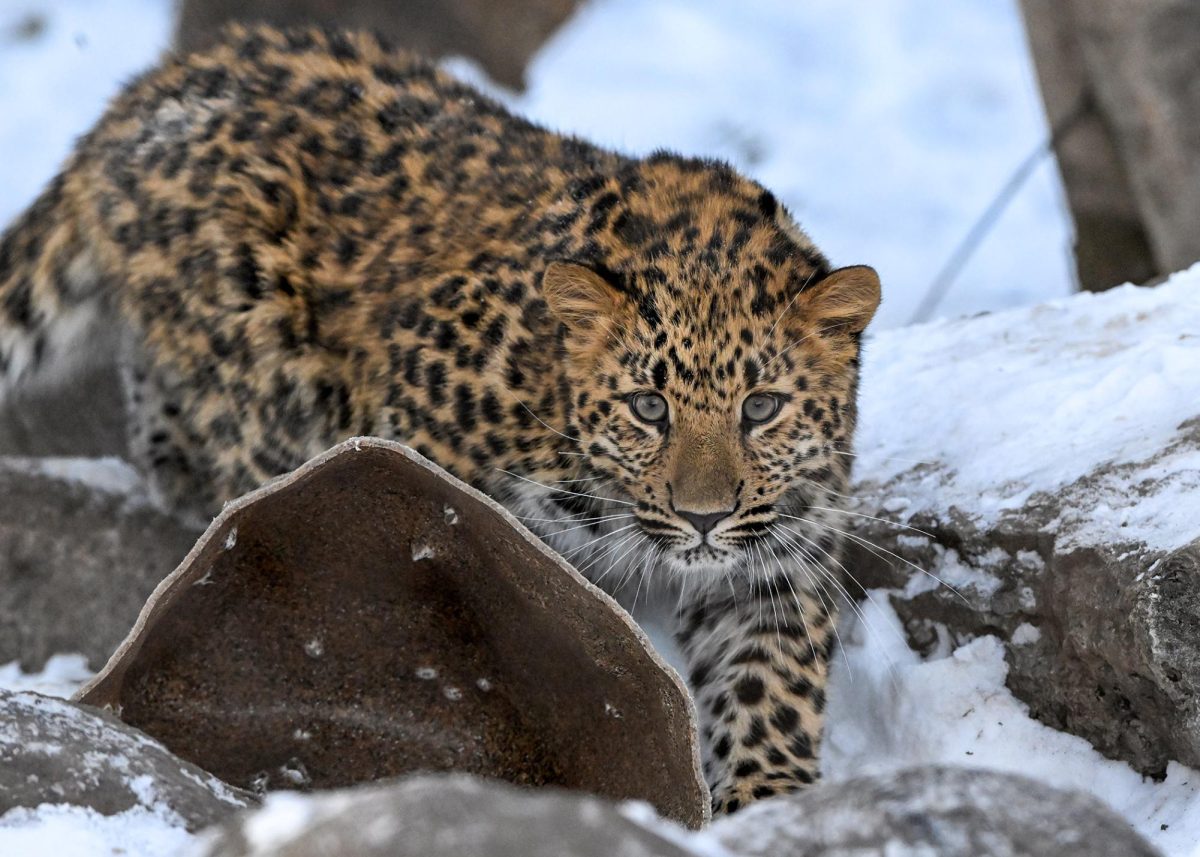
March in Chicago may feel bitingly cold to most, but for two of Brookfield Zoo’s rarest residents, it feels exactly like home. On July 14, two female Amur leopard cubs named Sady and Lacy were born and have become the faces of a critical mission to save their species.
Their mother, Mina, is a first-time mother who came to Brookfield Zoo in 2021 from Rosamond Gifford Zoo.
As the world’s most endangered big cat, the Amur leopard faces a precarious future: Fewer than 100 leopards are estimated to remain in their native range of Russia and China.
“In the wild, Amur leopards are listed as Critically Endangered on the IUCN Red List. Habitat loss, poaching and conflict with humans have caused their population to decline significantly,” Racquel Ardisana-Penney, Brookfield Zoo associate director of care and conservation for carnivores and small mammals, said.
The birth of these sisters at Brookfield Zoo was a landmark event for global conservation, as they represent two of only four Amur leopard cubs born at accredited zoos in all of 2025.
“This means every individual, especially newborns, are very important for the future of the species,” Ardisana-Penney said.
The road to their public debut was one of careful monitoring and behind-the-scenes milestones. For the first four months of their lives, the cubs remained in a private den with their mother. Because the birth of the leopards are so vital to the survival of their species, zoo officials had to be incredibly thoughtful.
“Each day continues to bring new adventures for the sisters,” Ardisana-Penney said. “One way that we care for them is through enrichment, which are novel items and experiences to encourage natural behaviors.”
These types of enrichment include exhibits that closely mirror their natural habitat. Their exhibits include elevated rocks for resting and climbing as well as logs for scratching.
As Sady and Lacy continue to grow into powerful predators, they remain a symbol of what can be achieved through professional care as well as the public’s help.
“Zoos play an important role in conservation, research and education. Public support helps us continue protecting animals both here and in the wild,” Ardisana-Penney said.
For the visitors watching them tumble in the snow this winter, the cubs are more than just a cute attraction; they are a living testament to the ongoing fight against extinction.